Review · Accessible Gardening
Best ergonomic shovel: Radius Root Slayer vs Fiskars, and what to look for
An ergonomic shovel changes two things: the shape of the handle, so you push with your forearm instead of squeezing with your hand, and where the weight sits, so the blade is easier to lift. For anyone with a sore back, weak grip or arthritis, those two changes matter more than the word on the label. This review compares the Radius Root Slayer, the Fiskars Pro and three other designs, and explains what to look for.
 CarstenGrows everything in pots
Updated 23 Aug 2026
6 min read
Compared on design and specifications
CarstenGrows everything in pots
Updated 23 Aug 2026
6 min read
Compared on design and specifications
The links below are affiliate links: if you buy through one I earn a small commission, which costs you nothing extra and does not affect the rankings. How recommendations are made.
Top picks
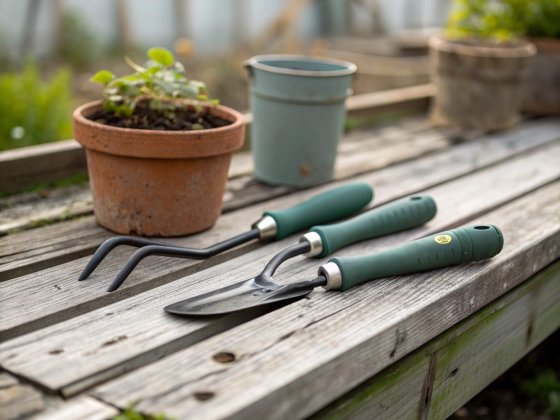
Radius Garden Root Slayer
Digging in rooty or compacted ground with less hand and wrist strain
- Rating
- 4.7
- Weight
- about 4.6 lb
- Handle
- O-handle, resin
The O-handle lets you push and lift with your forearm and palm rather than a closed grip, and the serrated, inverted-V blade cuts through roots that stop a flat blade. Heavier than a Fiskars, but the balance is close to the hands.
Check price
Fiskars Pro Digging Shovel
Anyone who finds a standard shovel too heavy to lift repeatedly
- Rating
- 4.4
- Weight
- about 3.8 lb
- Handle
- D-handle, steel
Welded steel construction at under four pounds, a wide foot platform so you can step rather than push, and a D-handle that is comfortable if your grip is fine. The lightest full-size option here.
Check price
Radius Garden Ergonomic Hand Trowel
Potting up, mixing and planting in containers, where a full-size shovel is the wrong tool
- Rating
- 4.6
- Weight
- about 11 oz
- Handle
- O-handle, resin
Most container work is done with a trowel, not a shovel, and this one uses the same forearm-and-palm grip as the Root Slayer in a tool that weighs a few ounces. For arthritic hands it is the single most useful tool on this page.
Check priceAll 5, side by side
Compared on handle design, weight, length and blade shape, from manufacturer specifications.
| Tool | Best for | Length | Handle | Weight | Score | |
|---|---|---|---|---|---|---|
| Radius Garden Root Slayer | Rooty ground, weak grip | 46 in | O-handle | 4.6 lb | 4.7 | Price |
| Fiskars Pro Digging Shovel | Lightest full-size option | 47 in | D-handle | 3.8 lb | 4.4 | Price |
| Radius Garden Ergonomic Trowel | Container work, arthritic hands | 11 in | O-handle | 11 oz | 4.6 | Price |
| Radius Garden PRO Stainless Shovel | A conventional blade with the O-handle | 46 in | O-handle | 4.4 lb | 4.2 | |
| Bent-shaft 'ergonomic' shovel not picked | — | 48 in | D-handle, bent shaft | 5+ lb | 2.8 |
What makes a shovel ergonomic
The word is on a lot of labels, and it often means nothing more than a rubber sleeve on the handle. Two design choices change how a shovel feels in use, and they are worth understanding before looking at any product.
The handle shape. A conventional shovel ends in a D-handle or a straight shaft, and both need a closed grip: your fingers wrap around the handle and your hand does the holding while your arm does the work. An O-handle is a closed loop large enough to put your palm through. You push with the heel of your hand and lift with your forearm, and the fingers barely close. For arthritic hands, carpal tunnel or a weak grip, that is the difference between a tool you can use for an hour and one you put down after five minutes.
Weight and balance. A shovel blade out at the end of a 4-foot shaft is a lever working against you. A lighter blade helps, and so does a tool whose weight sits closer to the handle. The lightest full-size shovels are around 3.5 to 4 pounds; heavy-duty ones run 5 to 6. For repeated lifting, a pound makes a real difference.
Beyond those two, a wide foot platform on the blade lets you drive the shovel with your leg rather than your arms, a serrated or pointed blade cuts through roots instead of bouncing off them, and a shorter shaft suits shorter users and seated gardening. None of this costs much; a good ergonomic shovel is in the same price band as a good conventional one.
How these were compared
The five tools in the table were compared on handle design, weight, shaft length, blade shape and price, using manufacturer specifications and the design principles above, with particular attention to how each one treats a hand that cannot close tightly or an arm that cannot lift much. Ratings reflect how well each tool serves that reader, not how well it digs a trench in a landscaper's hands.
Also considered: Radius Garden PRO stainless shovel
The same O-handle on a conventional wide, flat stainless blade. It moves more mix per lift than the Root Slayer and suits scooping and moving potting mix from a bag to a pot. It lacks the serrated edge, so it is less useful for roots, and the wider blade makes each full lift heavier. A good choice if you want the handle but mostly scoop rather than dig.
What to look for if none of these suit
- An O-handle or a large loop if grip is the issue. Several brands now make them; the shape matters more than the name.
- Under 4 pounds for a full-size shovel if lifting is the issue. Check the listed weight; "lightweight" on the label means little.
- A shorter shaft, around 30 to 36 inches, for seated gardening or for working in raised containers. Border spades and "mini" shovels fit this.
- A wide foot platform so your leg does the driving.
- Fiberglass or resin shafts are lighter than ash; steel is strongest but heaviest.
1. Radius Garden Root Slayer — best overall
- Length
- about 46 in
- Weight
- about 4.6 lb
- Handle
- O-handle, resin
- Score
- 4.7 / 5
The O-handle lets you push and lift with your forearm and palm rather than a closed grip, and the serrated, inverted-V blade cuts through roots that stop a flat blade. Heavier than a Fiskars, but the balance is close to the hands. Best for digging in rooty or compacted ground with less hand and wrist strain.
Radius Garden built its whole range around the O-handle, and the Root Slayer is the tool that made the idea popular. The handle is a wide resin loop; the blade is a narrow, inverted-V shape with serrated edges, made from carbon steel. It is a digging and cutting tool rather than a scooping one.
In use, the handle is the point. You push down with your palm, step on the wide foot platform, and lift with your forearm. There is no moment where a closed grip is needed. The serrated blade cuts fibrous roots and compacted mix that a flat spade would skid over, which is useful for anyone breaking up an old bed or a root-bound container.
The trade-offs are weight and blade shape. At around 4.6 pounds it is heavier than the Fiskars, though the balance sits close to the hands. And the narrow blade moves less soil per lift than a full digging shovel, so for moving a pile of mix you will want something wider. For digging, cutting and planting with limited grip, it is the best tool here.
What's good
- O-handle needs very little grip strength
- Serrated blade cuts roots instead of bouncing off them
- Lifetime guarantee
What's less good
- Heavier than a standard spade
- Blade is narrower than a full digging shovel
2. Fiskars Pro Digging Shovel — lightest
- Length
- about 47 in
- Weight
- about 3.8 lb
- Handle
- D-handle, steel
- Score
- 4.4 / 5
Welded steel construction at under four pounds, a wide foot platform so you can step rather than push, and a D-handle that is comfortable if your grip is fine. The lightest full-size option here. Best for anyone who finds a standard shovel too heavy to lift repeatedly.
Fiskars makes the lightest full-size shovel in this comparison: a welded steel shaft and blade at around 3.8 pounds, with a D-handle and a large, flat foot platform. It is very strong, and the foot platform is the best of the group for driving the blade with your leg.
The D-handle is the limitation. It is comfortable and well shaped, but it needs the fingers to close, and for an arthritic hand that is the thing to avoid. For someone whose issue is lifting weight rather than gripping, the Fiskars is the better choice, because every lift is lighter. For someone whose issue is grip, the Root Slayer is.
What's good
- Lightest in the comparison
- Large, flat foot platform
- Very strong welded shaft
What's less good
- D-handle still needs a closed grip
- Long shaft is awkward for shorter users
3. Radius Garden Ergonomic Hand Trowel — best for containers
- Length
- about 11 in
- Weight
- about 11 oz
- Handle
- O-handle, resin
- Score
- 4.6 / 5
Most container work is done with a trowel, not a shovel, and this one uses the same forearm-and-palm grip as the Root Slayer in a tool that weighs a few ounces. For arthritic hands it is the single most useful tool on this page. Best for potting up, mixing and planting in containers, where a full-size shovel is the wrong tool.
This is on a shovel page because most container gardeners rarely need a shovel at all. Filling pots, mixing in fertilizer, planting seedlings and tipping out spent mix are trowel jobs, and a trowel is the tool that goes in and out of the hand a hundred times in an afternoon.
The Radius trowel uses the same O-handle as the Root Slayer, scaled down. The blade is cast aluminum, so it weighs a few ounces and does not rust. You push it into the mix with your palm and lift with the wrist straight. For arthritic hands it is the one tool on this page worth buying first.
What's good
- Grip needs almost no hand strength
- Aluminum blade is light and does not rust
- Inexpensive
What's less good
- Not a shovel; it will not dig a bed
- Blade is narrower than a scoop trowel
Ones I wouldn't recommend
Bent-shaft shovels are sold as back-savers, and the idea is sound: the bend lets you stand more upright while digging. In practice the bend also moves the blade away from your body, so each lift has a longer lever and needs more effort from the arms and shoulders, and the shaft is harder to control in tight spaces. For someone whose problem is grip or arm strength rather than bending, it trades one strain for another. A straight-shaft tool with a better handle and a lighter blade helps more people.
Quick answer
If grip strength or wrist pain is the problem, the Radius Garden Root Slayer is the best full-size shovel here: its O-handle lets you push and lift without closing your hand, and the serrated blade cuts roots. If weight is the problem, the Fiskars Pro Digging Shovel is almost a pound lighter. And if most of your gardening happens in containers, the tool you will use every day is a trowel, and the Radius ergonomic hand trowel does more for sore hands than any shovel.
Worth knowing
If you garden entirely in containers and the shovel question is really about filling and emptying pots, consider a lightweight scoop or a small flat-bladed hand shovel as well as a trowel. Most container gardeners use a full-size shovel a few times a year at most, and a good trowel every day.
Common questions
Is an O-handle really easier than a D-handle?
For a hand that cannot close firmly, yes. The O-handle lets you push with the heel of the hand and lift with the forearm, so the fingers do not have to grip. For a hand with normal strength the difference is small.
What is the lightest full-size shovel?
Among the tools compared here, the Fiskars Pro at around 3.8 pounds. Lighter ones exist with aluminum blades, but they bend in compacted ground.
Do bent-handle shovels help a bad back?
They reduce bending, but they move the blade further from your body, so each lift needs more arm and shoulder effort. They suit some people and not others, and a lighter straight tool with a good handle helps more people overall.
What shovel length is right for me?
For standing work, a shovel whose handle reaches about your hip or waist when the blade is on the ground. For seated gardening or raised containers, a 30- to 36-inch tool is far easier to control.
Do I need a shovel for container gardening?
Rarely. A good trowel does most container jobs, and a small scoop handles moving mix. A full-size shovel is for beds, bags of compost and the occasional big pot.