Review · Getting Started
The best potting soil for container gardening: what to look for and which bags to buy
A good potting mix holds water without going soggy, drains freely, and carries enough food to get a plant started. Here is what the ingredients list tells you, and which bags are worth buying for vegetables, herbs and flowers.

The links below are affiliate links: if you buy through one I earn a small commission, which costs you nothing extra and does not affect the rankings. How recommendations are made.
Top picks
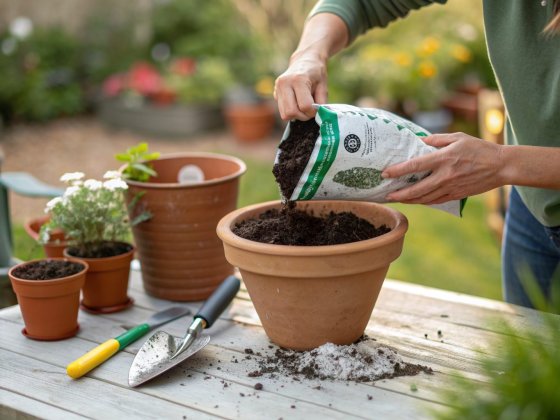
FoxFarm Ocean Forest
Vegetables, tomatoes, anything hungry
- Rating
- 4.8
- Per quart
- $0.55/qt
- Base
- Peat-based
Comes with enough feed built in for the first four to six weeks, drains well, and has no bark filler. It is what my tomatoes grow in.
Check price
Espoma Organic Potting Mix
Herbs, flowers, general use
- Rating
- 4.5
- Per quart
- $0.30/qt
- Base
- Peat-based
About half the price and close to the performance. Add a slow-release feed and it works very well for herbs and annuals.
Check price
Rosy Soil Peat-Free Mix
Anyone avoiding peat
- Rating
- 4.3
- Per quart
- $0.70/qt
- Base
- Peat-free
A coir and biochar base that takes up water easily, which not every peat-free mix does. The bags are small, so the cost adds up over several pots.
Check priceAll 7, side by side
Compared on what the bag contains, how it holds water and drains, and the price per quart.
| Mix | Best for | Bag | Base | Per quart | Score | |
|---|---|---|---|---|---|---|
| FoxFarm Ocean Forest | Vegetables, hungry plants | 1.5 cu ft | Peat | $0.55 | 4.8 | Price |
| Espoma Organic Potting Mix | Herbs, flowers, budget | 2 cu ft | Peat | $0.30 | 4.5 | Price |
| Rosy Soil Peat-Free | Peat-free growing | 1 cu ft | Coir + biochar | $0.70 | 4.3 | Price |
| Pro-Mix Premium | Seed starting, seedlings | 2 cu ft | Peat | $0.40 | 4.1 | |
| Miracle-Gro Performance Organics | General use | 1 cu ft | Peat | $0.45 | 3.7 | |
| Kellogg Patio Plus not picked | — | 1.5 cu ft | Bark heavy | $0.25 | 2.9 | |
| Store-brand “potting soil” not picked | — | 2 cu ft | Bark + sand | $0.18 | 2.1 |
What’s in a bag of potting mix
Bags labeled “potting soil” cover a wide range. The cheapest, often around $4.98 for two cubic feet, are usually forest bark fines, sand and a little peat. That blend drains quickly and holds very little water or nutrition, which is fine for filling a large planter of shrubs. In a 7-gallon pot with a tomato in it on a 95°F afternoon, it runs dry long before evening.
A proper potting mix is mostly peat or coir, with perlite for air and some form of feed to get plants started. It costs two to three times more per bag, which across eight pots comes to roughly $40 a year. Given how much it changes how often you water and how well things grow, it is money well spent.
How to read the bag
- Ingredients list first word tells you the most. Peat moss, sphagnum or coir at the top of the list is what you want. “Forest products” or “bark fines” first means the bag is mostly filler.
- Weight is a useful check. A 1.5 cu ft bag of good mix weighs 20 to 30 lb. Around 45 lb suggests sand and bark, and around 10 lb suggests it is mostly air.
- “Contains fertilizer” saves you about a month of feeding, which is worth paying for with vegetables.
- Moisture-control additives work for a few weeks and then stop holding much. A layer of mulch on the surface does the same job for nothing.
1. FoxFarm Ocean Forest — best overall
- Bag
- 1.5 cu ft
- Per quart
- $0.55/qt
- Base
- Peat-based
- Score
- 4.8 / 5
Comes with enough feed built in for the first four to six weeks, drains well, and has no bark filler. It is what my tomatoes grow in. Best for vegetables, tomatoes, anything hungry.
What's good
- Holds moisture without going soggy
- Enough nutrition to skip feeding for a month
- Consistent bag to bag
What's less good
- Most expensive per quart here
- Too rich for seedlings and succulents
2. Espoma Organic Potting Mix — best budget
- Bag
- 2 cu ft
- Per quart
- $0.30/qt
- Base
- Peat-based
- Score
- 4.5 / 5
About half the price and close to the performance. Add a slow-release feed and it works very well for herbs and annuals. Best for herbs, flowers, general use.
What's good
- Cheapest decent mix you can buy
- Fine texture, easy to wet
- Widely stocked
What's less good
- Light on nutrients, so plan to feed
- Some bags arrive compacted
3. Rosy Soil Peat-Free Mix — best peat-free
- Bag
- 1 cu ft
- Per quart
- $0.70/qt
- Base
- Peat-free
- Score
- 4.3 / 5
A coir and biochar base that takes up water easily, which not every peat-free mix does. The bags are small, so the cost adds up over several pots. Best for anyone avoiding peat.
What's good
- Peat-free and re-wets easily
- Light, which helps if pots need moving
- Less fungus gnat trouble
What's less good
- Small bags, high per-quart cost
- Needs feeding from week two
Ones I wouldn't recommend
Kellogg Patio Plus is bark-heavy, which suits shrubs in large planters. In a 7-gallon pot it dries out quickly in hot weather, and a tomato in it is hard to keep happy. Store-brand potting soil at around $5 a bag is mostly bark and sand. It holds very little water or feed, and the gap in price against a proper mix is only about $3 a bag, which is worth paying.
Worth knowing
Bagged mixes vary from batch to batch, so two bags of the same brand are not always identical. If you have had a different experience with any of these, let me know and I will update the table.
Common questions
Can I use garden soil in containers?
It is best avoided. Garden soil compacts in a container, drains poorly, and can bring weed seeds and disease into a pot that has no room to recover. A bagged potting mix is worth the cost.
Can I reuse potting mix next year?
For herbs and flowers, yes. Tip it out, pull out the old roots, and mix in about a third fresh mix and a handful of slow-release feed. For tomatoes, start with fresh mix, because blight can overwinter in the old.
Is peat-free worth it?
Environmentally it is a clear improvement. Older peat-free mixes were difficult to re-wet once they had dried out, though Rosy Soil and the newer coir blends handle that much better. Expect to feed a little earlier and to pay more per quart.
What about making my own?
It works well, and it becomes cheaper once you are filling more than about six pots. A good starting ratio is 3 parts coir or peat, 1 part perlite and 1 part compost, plus a slow-release feed. The DIY mix guide has the exact proportions.