Guide · Light & placement
Container gardening in shade: 23 plants that thrive (and 7 that struggle)
A shaded balcony, a north-facing porch or a spot under a tree can still grow a great deal. The key is knowing how many hours of light you have and choosing plants that suit them. This guide explains what the shade terms mean in hours, lists 23 edibles and ornamentals that do well in containers with limited sun, and names 7 that are better grown somewhere brighter.
- Sun
- 2–4 hours
- Morning sun counts for more than afternoon
- Container
- Any size
- Shade pots dry slower, so size down rather than up
- Water
- Less than you think
- Overwatering is the main risk in shade
- Best crops
- Leaves and herbs
- Lettuce, chard, mint, parsley thrive; fruiting crops struggle

Quick answer
Count your hours of direct sun on a clear day. With four to six hours you can grow most leafy crops, many herbs, peas, bush beans and a wide range of ornamentals. With two to four hours you can still grow lettuce, spinach, arugula, chard, mint, parsley, chives, hostas, ferns, begonias and impatiens. Under two hours, stick to the toughest foliage plants and a tray of baby salad leaves. In shade, water less and use a slightly smaller pot than you would in sun.
What the shade terms mean
Plant labels use a handful of phrases for light, and they are more precise than they sound. Measured in hours of direct sun on a clear day:
| Term | Hours of direct sun | Typical spot |
|---|---|---|
| Full sun | 6 or more | South- or west-facing, open |
| Part sun | 4 to 6 | East-facing, or sun for half the day |
| Part shade | 2 to 4 | Morning sun then shade, or dappled light all day |
| Full shade | Under 2 | North-facing wall, under a dense tree, a covered porch |
Two things change the picture. Morning sun is gentler than afternoon sun, so three hours of east light grows more than three hours of west light, which arrives hot. And reflected light counts: a pale wall, a light-colored floor or a nearby window bounces a surprising amount of light into a shaded corner. If you have the choice, put shade pots near something pale.
The only way to know your hours is to look. Pick a clear day, note when direct sun first hits the spot and when it leaves, and do it once in spring and once in summer, since the angle changes.
How shade changes the job
Containers in shade behave differently from containers in sun, and the adjustments are mostly in your favor.
- They dry out slowly. The daily watering that keeps a sunny balcony alive will drown a shaded one. Check with a finger and water only when the top inch is dry. Overwatering kills more shade pots than shade does.
- They can be smaller. Because moisture lasts longer, a 2-gallon pot in shade does what a 3-gallon pot does in sun. Size down rather than up.
- Growth is slower and softer. Plants stretch toward the light and stay more open. Turn pots a quarter-turn each week so they grow evenly.
- Leaves do better than fruit. Leaves are cheap for a plant to build; fruit is expensive. That is why lettuce thrives in part shade and a tomato sulks.
- Slugs like it too. Cool, damp and shaded is their ideal. Raise pots on feet and check under them at dusk.
23 plants that do well in shaded containers
Edibles for two to four hours
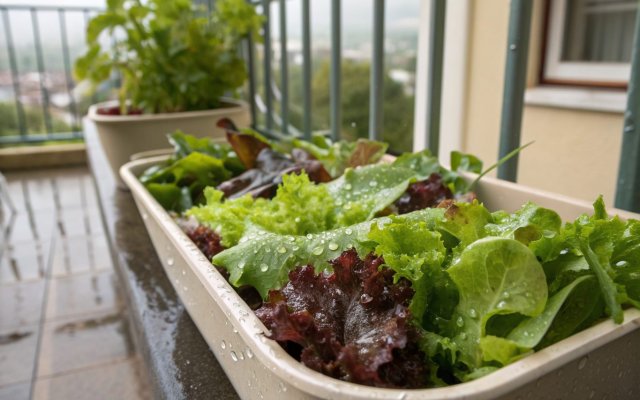
- Lettuce. The best shade crop there is. Happier in part shade than in summer sun, and a shaded tray stays sweet in July when sunny ones bolt. Any loose-leaf type.
- Spinach. Same story as lettuce: cool, moist and shaded is what it wants. Sow in spring and late summer.
- Arugula. Fast, peppery and bolt-prone in sun. Part shade slows it down and keeps the flavor milder.
- Swiss chard. Tolerates less light than almost any vegetable and keeps producing for months. Bright Lights is decorative enough for a front step.
- Kale. Grows more slowly in shade but grows, and the leaves are more tender. Dwarf types such as Dwarf Blue Curled suit a pot.
- Mint. Thrives in part shade with moist mix. Give it its own 3-gallon pot.
- Parsley. Flat-leaf or curly, happy with three hours of sun and steady moisture.
- Chives. Tough, perennial, and productive in part shade. One of the easiest plants on this list.
- Cilantro. Bolts in sun and heat; part shade gives you extra weeks of leaf.
- Scallions. Shallow-rooted, quick, and fine with four hours. Sow thickly in a window box.
- Radishes. Four hours is enough for a spring or fall sowing. Roots are a little smaller in shade.
- Peas. Sugar snap and shelling types crop with four to five hours, especially in spring. Dwarf varieties suit a pot with a short support.
- Bush beans. Need the top of the range, four to six hours, but a shaded east-facing balcony can grow a good crop.
- Alpine strawberries. The small, aromatic type fruits happily with three to four hours, unlike their full-size relatives.
Ornamentals for two to four hours
- Hostas. The classic shade plant, and excellent in a pot where slugs are easier to manage. Choose blue-leaved types for deep shade.
- Ferns. Japanese painted fern, lady fern and autumn fern all suit containers and want the moist shade a north wall provides.
- Heuchera. Grown for colored foliage in purple, lime and caramel, and happy with morning sun only.
- Begonias. The tuberous and Rex types flower and leaf for months in part shade. Let the mix dry slightly between waterings.
- Impatiens. The reliable shade annual for summer color. Newer mildew-resistant types are worth seeking out.
- Fuchsias. Flower all summer in part shade and trail well from a basket. Keep moist.
- Coleus. Grown for foliage in every color, and brighter in part shade than in sun.
- Caladiums. Large patterned leaves that scorch in sun and glow in shade. Treat as a summer annual in cold climates.
- Ivy and trailing vinca. Tough trailers for the edge of a pot in full shade, where little else will grow.
7 plants that need more light than shade gives
These will survive in a shaded container, which is why they end up there. They will not do what you bought them for.
- Tomatoes. Below six hours the plant grows and flowers but sets little fruit, and what it sets ripens slowly. Even a cherry tomato wants the sunniest spot you have.
- Peppers and chilies. Heat and light lovers. In shade they stay small and rarely fruit.
- Cucumbers, zucchini and squash. Large leaves, heavy fruit, and a need for full sun to power them. In shade they mildew.
- Basil. Tolerates four hours at a push but is leggy and bland; it wants six.
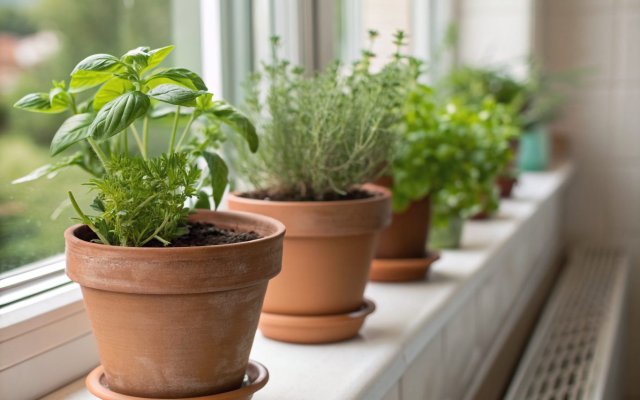
- Rosemary, thyme, oregano and lavender. Mediterranean herbs that rot in cool, damp shade. Give them the sunniest, driest corner instead.
- Potatoes. Grow in shade, but tubers stay small without six hours of sun.
- Most annual flowers sold for sun. Petunias, marigolds, zinnias and geraniums flower poorly and stretch in shade. Swap them for impatiens and begonias.
Making the most of limited light
A few things add light to a shaded spot or make better use of what there is:
- Paint the wall. A white or pale wall behind a north-facing balcony reflects light onto the pots and can add the equivalent of an hour.
- Raise the pots. A shelf, a stand or a hanging basket often lifts a plant above a railing or parapet into light the floor never gets.
- Move with the season. The sun is higher in summer, so a spot that is shaded in April may get three hours in July. Re-check, and move pots accordingly.
- Put the right plant in the brightest spot. Beans and peas go where the light is best; ferns and hostas can have the darkest corner.
- Use a grow light for edibles indoors. A small LED panel over a windowsill turns a north-facing kitchen into a reliable source of salad and herbs.
Worth knowing
If a plant in a shaded pot is failing, check the watering before blaming the light. A mix that stays wet for days, yellowing lower leaves and fungus gnats around the surface all point to too much water, which is by far the most common problem in shade.
Common questions
What vegetables grow in full shade?
With under two hours of direct sun, your best bets are baby salad leaves, spinach, arugula, mint, parsley and chives. They grow slowly but they grow. Anything that fruits needs more light.
Will a tomato grow on a north-facing balcony?
It will grow, flower, and set very little fruit. With two or three hours of sun, expect a handful of cherry tomatoes at best. Lettuce, chard and herbs are a much better use of the space.
How do I know how many hours of sun I get?
Watch the spot on a clear day and note when direct sun arrives and leaves. Do it in spring and again in midsummer, since the sun is higher and the hours often increase in summer.
Do shade plants need less water?
Yes, noticeably. The mix dries more slowly without sun and wind on it, so check with a finger rather than watering on a schedule. Overwatering is the main cause of failure in shaded containers.
Can I use a grow light outdoors?
Outdoor-rated LED lights exist, but for a balcony it is usually simpler to choose plants that suit the light you have and use a grow light indoors for herbs and salad.
Read next
About the author
Carsten
Hi, I'm Carsten. My garden is paved over, so there is no soil to plant into and everything I grow lives in a container. I started this site to find out how much is possible that way, and I use it to share what I learn about choosing containers, growing useful plants in small spaces, and making gardening work for different homes and different bodies. Questions, corrections and photos of your pots are all welcome. say hello.