Crop guide · Herbs
How to grow herbs in containers: the 8 that earn their pot
Herbs give more use per square foot than anything else you can put in a pot, and most of them are easy once you group them by how much water they want. This guide covers eight herbs that earn their place, with a pot size, sun and water needs and harvesting notes for each, plus which ones can share a container and which need their own.
- Container
- 1–3 gal
- Mint needs its own pot; most others can share
- Sun
- 4–6 hours
- Mediterranean herbs want the sunniest corner
- Water
- By group
- Dry-loving herbs and moisture-loving herbs in separate pots
- First harvest
- 3–6 weeks
- From a young plant; longer from seed
Varieties that work: Genovese basil · English thyme · Tuscan Blue rosemary · Spearmint · Flat-leaf parsley · Slow-bolt cilantro · Greek oregano.

Quick answer
Group herbs by water, not by recipe. Rosemary, thyme, oregano and sage like to dry out between waterings and can share a 3-gallon pot in full sun. Basil, parsley, cilantro and chives want steady moisture and can share another. Mint goes in a pot of its own, always. Give them four to six hours of sun, a free-draining potting mix, and pick often. Most herbs are ready to start harvesting three to six weeks after planting.
Why herbs are the best value in a pot
A supermarket packet of cut herbs costs a few dollars and lasts a week. A thyme plant costs about the same, lives for years, and gives you sprigs whenever you want them. Herbs are compact, most are happy in a small container, several are perennial, and they sit by the kitchen door where you will use them. Even a single windowsill box of three or four herbs changes how you cook.
The two watering groups
The single most useful thing to know about herbs is that they fall into two groups, and most problems come from mixing them.
The dry group: rosemary, thyme, oregano, sage, lavender. These are Mediterranean plants from thin, stony soil. They want full sun, a gritty, free-draining mix, and to dry out between waterings. Kept damp, they rot at the roots and die from the base up. They can share a pot happily, and a 3-gallon container holds three of them.
The moist group: basil, parsley, cilantro, chives, dill, mint. These want consistently moist mix and tolerate a little less sun. They wilt fast when dry and recover fast when watered. They can share a pot too, with one exception.
Mint is the exception. It spreads by runners under the surface and within a season it is the only thing left in a shared container. Give it a pot of its own, and it will be one of the most productive things you grow.
The eight herbs
Basil
The most rewarding and the most tender. Basil wants warmth, six hours of sun, and steady water; it collapses at the first cold night, so plant out after the last frost. One plant per 2-gallon pot, or three in a 5-gallon. Pinch the growing tips from the start and keep pinching: every time you take the top pair of leaves, the plant branches and gets bushier. Remove flower spikes as soon as they appear, because a basil that flowers stops producing leaves and the flavor drops. Genovese is the classic; Greek or Spicy Globe basil is a compact ball that suits a small pot. A supermarket basil plant is a dozen seedlings crammed together; split it into three pots the day you get it home and all three will last the summer.
Thyme
Hardy, perennial, and almost impossible to overwater-proof, so keep it dry. A 1-gallon pot is plenty. Full sun, gritty mix, water only when the pot is light. Trim it back by a third after flowering to stop it going woody. English thyme for cooking, lemon thyme for fish and chicken. A plant lasts four or five years in a pot.
Rosemary
A woody shrub that becomes a small bush in a 3-gallon pot. Full sun, the driest corner, water sparingly, and never let it sit in a saucer. In cold regions bring it into a cool, bright porch for winter, since wet winter mix kills more rosemary than frost does. Tuscan Blue is upright and good for cooking; prostrate types trail over the edge of a pot. Harvest sprigs from the tips and it will keep branching.
Mint
Vigorous, easy, happy in part shade, and the reason the "own pot" rule exists. A 3-gallon pot, moist mix, four hours of sun. Cut it hard whenever it starts to look leggy and it regrows in two weeks. Spearmint is the one for tea and cooking; peppermint is stronger. Every two or three years, tip it out, cut the root mass into quarters, and repot one piece in fresh mix.
Parsley
A biennial grown as an annual, slow from seed and quick from a young plant. A 2-gallon pot, moist mix, four to six hours of sun. Flat-leaf has more flavor than curly. Pick the outer stems at the base and leave the center to keep producing; a plant picked this way crops from spring to the first hard frost and often through a mild winter. It bolts in its second year, so replace it each spring.
Chives
The easiest herb on this list. A 1-gallon pot, part sun, moist mix, and it comes back every spring for years. Cut the leaves an inch above the base with scissors and it regrows in a fortnight. The purple flowers are edible and the bees like them. Divide the clump every three years.
Cilantro
The one that frustrates people, because it bolts the moment the weather warms. Cilantro is a cool-season herb: sow it in early spring and again in late summer, in a 2-gallon pot with moist mix, and pick it young. In summer it goes to seed within weeks no matter what you do, so sow a pinch every three weeks rather than expecting one plant to last. The seeds it produces are coriander, which is a fair consolation. Slow-bolt varieties buy you an extra week or two.
Oregano
Hardy, perennial, and happiest neglected. A 2-gallon pot in full sun, gritty mix, dry between waterings. Greek oregano has far more flavor than the common type; check the label. Cut it back hard in spring and again after flowering. It spreads a little but not like mint, and it shares a pot with thyme and sage without trouble.
Pot sizes at a glance
| Herb | Pot size | Sun | Water | Shares with |
|---|---|---|---|---|
| Basil | 2 gal | 6 h | Moist | Parsley, chives |
| Thyme | 1 gal | 6 h | Dry | Rosemary, oregano, sage |
| Rosemary | 3 gal | 6 h | Dry | Thyme, oregano, sage |
| Mint | 3 gal | 4 h | Moist | Nothing |
| Parsley | 2 gal | 4–6 h | Moist | Basil, chives, cilantro |
| Chives | 1 gal | 4 h | Moist | Parsley, basil |
| Cilantro | 2 gal | 4 h | Moist | Parsley (short season) |
| Oregano | 2 gal | 6 h | Dry | Thyme, rosemary, sage |
Mix, feeding and containers
Standard potting mix suits the moist group as it comes. For the dry group, mix in a third of horticultural grit or perlite so water runs through. Terracotta pots, which wick moisture out through their walls, are a good match for rosemary and thyme and a poor one for basil.
Herbs need less feeding than vegetables, and too much nitrogen makes them leafy and bland. A liquid feed at half strength once a month through the growing season is enough for the moist group; the dry group can go without.
Harvesting so the plant keeps going
The rule for almost every herb is to pick from the top and the outside, often, and never take more than a third at once. Pinching tips makes basil, mint and oregano branch. Cutting outer stems at the base keeps parsley and chives producing. Snipping sprig ends keeps rosemary and thyme compact. A herb that is never picked gets leggy, flowers and declines; one that is picked every few days stays in the leafy, productive stage all season.
Herbs on a windowsill
Indoors is harder than people expect. A south-facing windowsill gives enough light for chives, parsley and mint through winter, and for basil in summer. Rosemary and thyme sulk indoors in the low light of winter and usually pick up again outside in spring. A small grow light over the sill changes the picture entirely and keeps basil going all year. Whatever you grow inside, water less than you would outdoors; the pots dry slowly in a cool room.
Worth knowing
If a herb is dying and you are not sure why, the first thing to check is which group it belongs to and whether it is being watered like the other group. A yellowing rosemary is almost always too wet; a wilting basil is almost always too dry.
Common questions
Which herbs can grow together in one pot?
Group by water. Rosemary, thyme, oregano and sage share happily. Basil, parsley, chives and cilantro share too. Keep mint on its own, and keep the two groups in separate pots.
Why does my basil keep dying?
Usually cold or drought. Basil needs warm nights, six hours of sun and steady moisture. A supermarket plant is many seedlings in one plug, so split it into several pots and it will last far longer.
Why does my rosemary turn yellow and die?
Almost always overwatering. Rosemary wants a gritty mix, full sun, and to dry out completely between waterings. Never leave it standing in water.
Can I grow herbs from seed?
Basil, cilantro, dill, parsley and chives are easy from seed. Rosemary, thyme, oregano and mint are slow or unreliable from seed and much better bought as young plants or grown from cuttings.
Which herbs come back every year?
Thyme, oregano, chives, mint and sage are hardy perennials in most climates. Rosemary is perennial but needs protection from wet winters in cold regions. Basil and cilantro are annuals; parsley is a biennial usually replaced each spring.
Read next
All herbs guides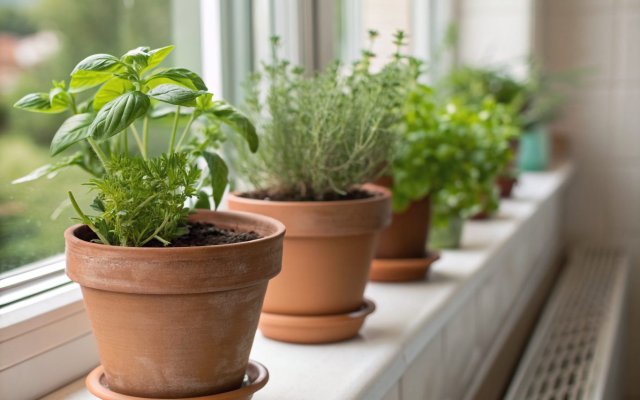
About the author
Carsten
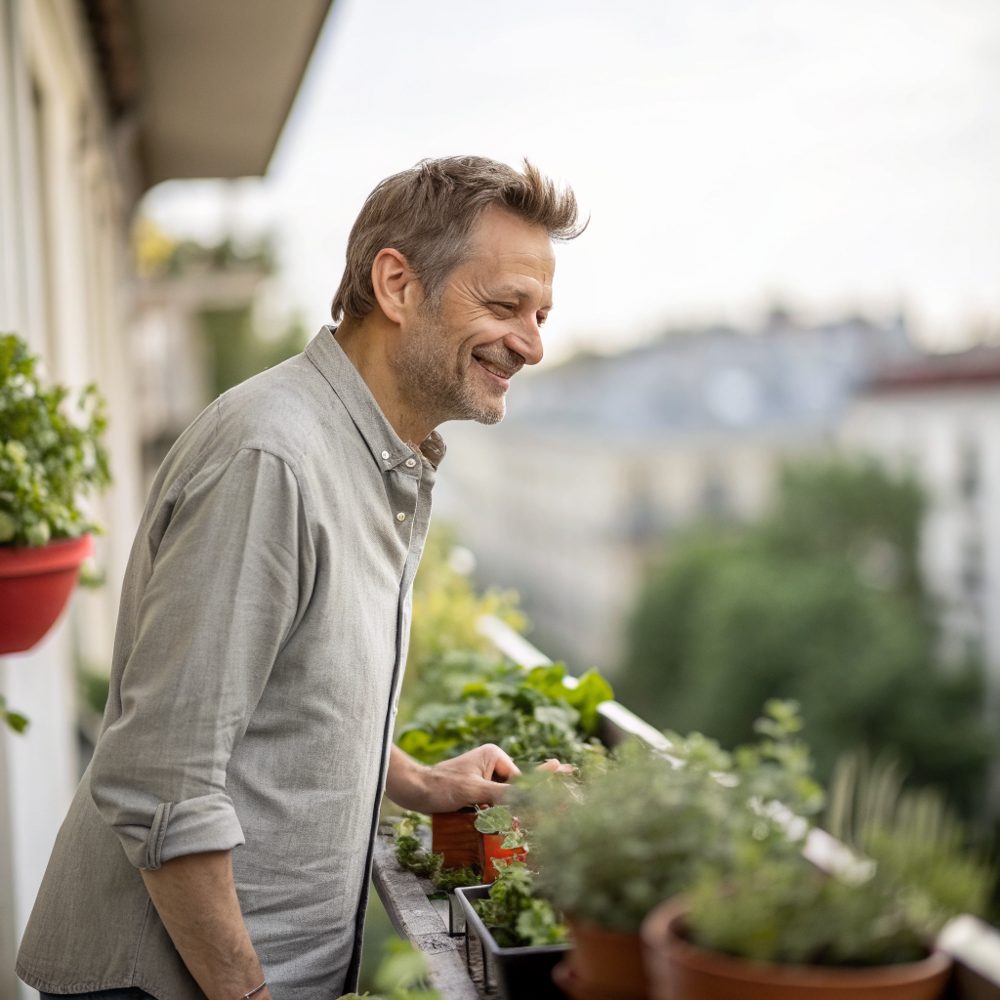
Hi, I'm Carsten. My garden is paved over, so there is no soil to plant into and everything I grow lives in a container. I started this site to find out how much is possible that way, and I use it to share what I learn about choosing containers, growing useful plants in small spaces, and making gardening work for different homes and different bodies. Questions, corrections and photos of your pots are all welcome. say hello.