Crop guide · Seasons
Fall container gardening: what to plant in September, October and November
Fall is the easiest season in a container garden and the one most people skip. The pots are already full of mix, the light is gentler, and the crops that suit it are the forgiving ones: kale, lettuce, spinach, chard, radishes, garlic and pansies. This guide gives a month-by-month plan for September, October and November, and explains what to do with the summer pots as they finish.
- Sow from
- Late August
- Six to eight weeks before your first frost date
- Container
- Any size
- Garlic needs 12 inches of depth; most others are fine in 6
- Cold
- Down to 20°F
- Kale, spinach and some lettuces shrug off light frosts
- Sun
- 4+ hours
- Lower autumn sun means south-facing spots matter more

Quick answer
From late August, sow lettuce, spinach, arugula and radishes into any container 6 inches deep, and plant out kale, chard and pak choi as young plants. In October, plant garlic cloves in a pot at least 12 inches deep for next July, and plant pansies and violas for color through winter. As tomatoes, beans and cucumbers finish, pull them, refresh the mix, and reuse the pots. Most of these crops take a light frost, and kale tastes better after one.
Why fall is worth it
By September a container garden has done the hard part. The pots are full of mix, the watering routine is set, and the heat that made July difficult is easing. The crops that suit autumn are the ones that bolt or struggle in summer: lettuce, spinach, radishes, chard and the brassicas. They germinate quickly in warm mix, grow through the mild weeks, and then sit in the cold, keeping well on the plant for weeks. With a little timing you can be picking salad in November and kale in December, and garlic planted now is the start of next year's crop.
The key date is your first frost. Look it up for your area, count back six to eight weeks, and that is your last sowing date for most crops. In much of the US that means sowing from mid-August to mid-September.
September
September is the main planting month. The mix is warm, which helps germination, and there is enough daylight left for plants to reach a useful size before growth slows.
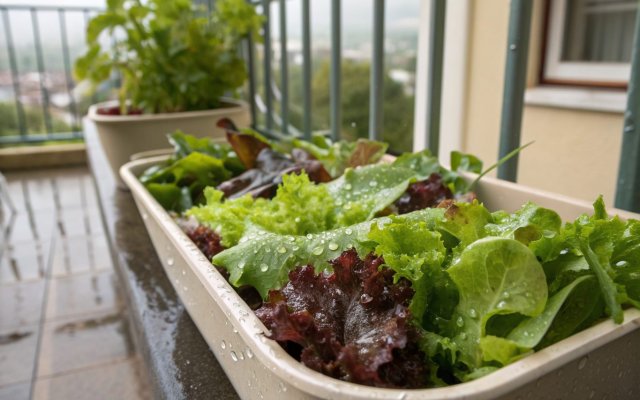
Sow directly: lettuce (any loose-leaf type; Winter Density and Marvel of Four Seasons for cold), spinach, arugula, radishes, mizuna and other Asian greens, scallions. A 6-inch-deep tray or window box is enough for all of these. Sow a pinch every two weeks through the month.
Plant as young plants: kale, chard, pak choi, and if you can find them, compact broccoli or cabbage. These need a head start and are slow from seed this late, so buy seedlings. Kale and chard want a 3-gallon pot each; pak choi is happy in a trough.
Keep going: tomatoes, peppers and beans are still cropping. Stop feeding tomatoes now so the plant puts its energy into ripening what it has rather than making new leaves. Pick beans and cucumbers every other day to keep them producing until the plants give up.
Water: still most days in a warm September, but check first. Cooler nights mean pots dry more slowly, and the daily summer routine can become too much.
October
October is the turning point. Fruiting crops finish, leafy crops come into their own, and the two winter jobs begin.
Plant garlic. This is the highest-patience, lowest-effort crop on the site. Break a bulb of hardneck garlic into cloves, push each one pointed end up 2 inches deep and 4 inches apart into a pot at least 12 inches deep, and leave it. It roots through autumn, sits through winter, and is ready the following July. A 5-gallon pot holds six to eight cloves. Use garlic sold for planting rather than supermarket bulbs, which may be treated against sprouting.
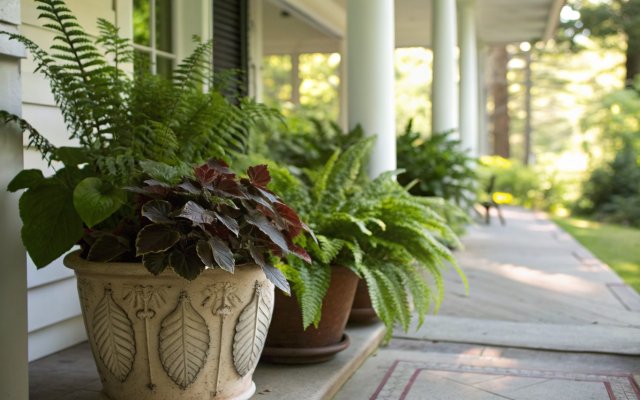
Plant for color. Pansies, violas, ornamental kale and cabbage, heuchera and small evergreens such as dwarf conifers and skimmia all go in now and look good through winter. Pansies and violas flower in any mild spell from now until spring. A 12-inch pot by the door with three violas and a small evergreen is the classic arrangement, and it works.
Clear the summer pots. Once a tomato, cucumber or squash has stopped producing, pull it. Compost the plant unless it had blight or mildew, in which case it goes in the trash. Tip the mix out, pick out the roots, and either refresh it or bag it for spring.
Bring in the tender herbs. Basil is finished at the first cold night. Rosemary survives outdoors in mild climates but hates wet winter mix; in cold regions move it to a cool, bright porch. Chives, thyme, oregano and mint are hardy and stay out.
Cover on frosty nights. A sheet of fleece or an old bedsheet over a tray of lettuce on a frosty night keeps it going for weeks longer. Take it off in the morning.
November
November is about keeping what you have going and getting the pots through winter.
Harvest: kale (sweeter after a frost), chard, the last lettuce and spinach, radishes, scallions. Pick the outer leaves of kale and chard and leave the centers; both keep producing in mild spells until deep winter.
Water less. Cold pots dry slowly. Water only when the mix is dry an inch down, and never in the evening before a freeze. Waterlogged mix that freezes is what cracks pots and kills roots.
Protect the containers. Terracotta and ceramic pots crack when wet mix freezes and expands inside them. Either move them somewhere sheltered, empty them, or wrap them. Plastic, fabric and wooden containers are fine outdoors. Raise everything on pot feet so it drains.
Group and shelter. Move pots together against a wall, ideally south-facing. They shade each other's sides, the wall stores a little heat, and the grouping cuts wind, which does more damage than cold.
Mulch the garlic with an inch of straw or bark once the top has frozen. It does nothing visible until March.
What to do with the summer mix
Potting mix does not need throwing away at the end of the season, and buying fresh for every pot every year is expensive. The rule is simple:
- Mix from tomatoes, potatoes, peppers and eggplants goes on the compost heap or into pots for flowers next year, not back into pots for those crops. Blight and wilt carry over in it.
- Mix from everything else can be reused. Tip it onto a tarp, pick out the roots, mix in a third fresh potting mix and a handful of slow-release fertilizer, and it is ready to go again. Do this in spring rather than now, and store the old mix in the pot or a bag over winter.
- Mix that grew something diseased, such as a mildewed squash or a blighted tomato, is not worth the risk. Bag it for the trash.
Containers over winter
| Material | Outdoors in freezing weather? | Notes |
|---|---|---|
| Plastic | Yes | May go brittle in very cold regions; fine in most |
| Fabric grow bags | Yes | Empty ones fold flat for storage |
| Wood | Yes | Raise on feet so the base drains |
| Glazed ceramic | Usually | Frost-rated ones are fine; cheap ones can crack |
| Terracotta | No | Wicks water, freezes, cracks. Empty it or bring it in |
| Metal | Yes | Roots get cold fast; wrap with bubble wrap for overwintering plants |
Common problems
| What you see | What it usually is | What helps |
|---|---|---|
| Seeds sown in September never came up | Mix too hot in a late heat wave | Germinate indoors and move trays out, or sow in the shade |
| Lettuce rots at the base | Too wet, cold nights | Water less, in the morning only, and improve drainage |
| Kale leaves full of holes | Cabbage white caterpillars, still active in September | Pick them off; cover with fine mesh |
| Pot cracked after a freeze | Wet mix expanded | Empty terracotta for winter; raise other pots on feet |
| Pansies flop and yellow | Waterlogged | Check drainage holes, water only when dry |
| Garlic pushes out of the mix | Frost heave | Push it back in and mulch |
Worth knowing
Kale does taste better after a frost. The cold converts some of the plant's starch to sugar, and the leaves are sweeter and more tender than in summer. If you have been put off kale by the tough leaves of August, try it again in November.
Common questions
When is it too late to plant for fall?
For crops you want to harvest this year, about six weeks before your first frost date. After that, sow only the hardy leaves that will sit through winter, such as spinach and winter lettuce, and plant garlic, which is meant to overwinter.
Can I leave my pots outside all winter?
Plastic, fabric, wood and frost-rated ceramic pots can stay out, ideally grouped against a wall and raised on feet. Terracotta should be emptied or brought somewhere dry, because it cracks when wet mix freezes inside it.
Should I keep watering in winter?
A little. Pots dry slowly in cold weather, but they do dry, especially evergreens and anything under a roof overhang. Check once a week and water in the morning when the mix is dry an inch down.
Can I grow anything in a container through winter?
In mild climates, lettuce, spinach, kale and chard keep going all winter. In cold climates, kale and chard survive, and pansies and violas flower in every mild spell. Garlic is growing roots under the surface the whole time.
Do I have to replace the potting mix every year?
No. Reuse it for most crops after picking out roots and refreshing it with a third new mix and some slow-release fertilizer. Start fresh only for tomatoes and potatoes, or where a plant was diseased.
Read next

About the author
Carsten
Hi, I'm Carsten. My garden is paved over, so there is no soil to plant into and everything I grow lives in a container. I started this site to find out how much is possible that way, and I use it to share what I learn about choosing containers, growing useful plants in small spaces, and making gardening work for different homes and different bodies. Questions, corrections and photos of your pots are all welcome. say hello.