Guide · Planning
Container gardening for beginners: a step-by-step guide
A container garden comes down to a few decisions: what to grow in, what to fill it with, where to put it, what to plant, and how to keep it watered. This guide takes them in order, then gives you a first-week checklist and a first-season calendar so you know what to do and when.
- Containers
- 3 to 5 pots to start
- Sized for the crop, with drainage holes
- Sun
- 4–8 hours
- Count it before you buy plants
- Water
- Most days in summer
- A quick finger test tells you when
- First harvest
- 4–6 weeks
- Lettuce and radishes are the quickest

Quick answer
Start with three to five containers of at least 3 gallons each, fill them with bagged potting mix, put them where they get four or more hours of direct sun, and plant a mix of quick, forgiving crops such as lettuce, radishes, bush beans and a few herbs. Water whenever the top inch of mix is dry. Everything else in this guide is detail, and you can pick it up as you go.
What container gardening is
Container gardening is growing plants in pots, troughs, grow bags, buckets or any other vessel that holds soil, rather than in the ground. The plants are the same ones you would grow in a bed. What changes is the environment around the roots: a container holds a small, fixed amount of mix, warms and dries faster than the ground, and has no reserves to draw on. That is why the container, the mix and the watering get so much attention in every guide on this site. Get those three right and most crops are straightforward.
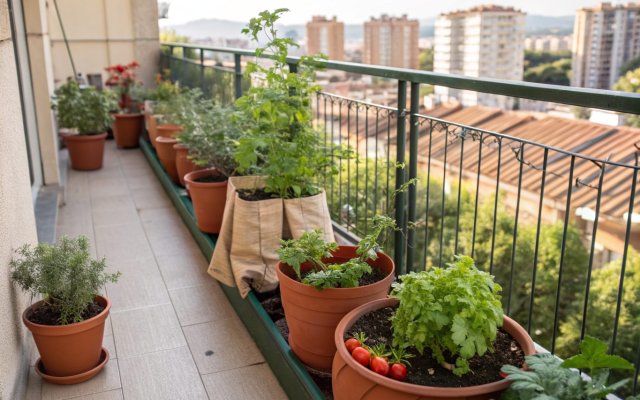
The advantages are real. There is no digging, no bed to prepare and no lawn to sacrifice. A pot in the wrong place can be moved. Weeds are rare, slugs are fewer, and you can garden on a balcony, a paved yard, a doorstep or a rooftop. Many people who have a full garden still grow their herbs, salads and tomatoes in containers because they are closer to the kitchen and easier to look after.
Will it work in your space?
Almost any outdoor space works for something. The question is what. Three things decide it:
- Light. This matters more than anything else. Fruiting crops such as tomatoes, peppers and cucumbers want six to eight hours of direct sun. Leafy crops and most herbs are fine with four. A shaded north-facing spot can still grow lettuce, chard, mint and parsley. Before you buy a single plant, spend one clear day noting when the sun reaches your space and when it leaves. The shade guide explains what the hours mean in practice.
- Water access. A tap or hose nearby makes life much easier. If you will be carrying water in a can, keep the number of pots small in year one, or choose larger pots, which need filling less often.
- Weight. Wet potting mix is heavy. A 10-gallon pot can weigh 60 pounds after watering. On a balcony or roof, keep big containers near the walls and check what the structure is rated for. Plastic and fabric pots are much lighter than ceramic or terracotta.
If you are renting, nothing here needs to be fixed to the building. Freestanding pots, railing planters that hook over the rail without screws, and a tiered stand cover almost every situation, and all of it comes with you when you move.
Your first 5 decisions
Every container garden, large or small, rests on the same five choices. Make them in this order and each one makes the next one easier.
1. The container
Size is the decision that matters. A container that is too small dries out in an afternoon and limits the roots, and no amount of care makes up for it. As a rough guide: herbs and lettuce are happy in 1 to 3 gallons; peppers, bush beans and chard want 3 to 5; tomatoes, cucumbers and zucchini need 5 gallons at minimum and do better in 7 to 10; potatoes want 10 or more. The container size chart lists every crop on this site with a minimum. Whatever you choose, it needs drainage holes in the base. Material matters less than size: fabric grow bags, food-safe plastic buckets, glazed ceramic and wooden troughs all work, and the containers hub compares them.
2. The mix
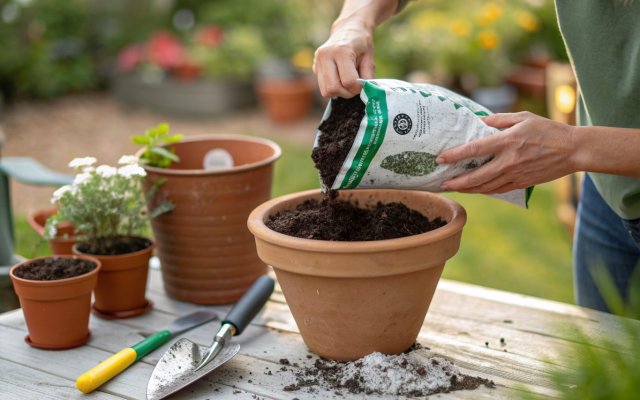
Fill containers with bagged potting mix, not soil dug from the garden. Garden soil packs down hard in a pot, drains badly and brings weed seeds and disease with it. A good potting mix is mostly peat or coir with perlite for air and usually a little fertilizer to start the plant off. It costs more than the cheapest bags on the pallet, but on a first garden of five pots the difference is about the price of a couple of plants, and it is the single best thing you can spend it on. The potting soil guide explains how to read a bag and which ones are worth buying.
3. The light
Now match your plants to the hours you counted. Six or more hours: anything goes, including tomatoes, peppers, cucumbers, beans and squash. Four to six hours: lettuce, chard, kale, peas, bush beans, radishes, most herbs, strawberries. Under four hours: lettuce, spinach, arugula, mint, parsley, chives and a surprising number of ornamentals. Morning sun is gentler than afternoon sun, so an east-facing spot with four hours can grow more than a west-facing spot with the same number.
4. The plants
For a first season, choose crops that are forgiving, quick, and worth eating. Good candidates are cut-and-come-again lettuce, radishes, bush beans, chard, a compact tomato such as Patio Princess or Bush Early Girl, a pepper, and two or three herbs. Buy young plants rather than seed for anything slow, such as tomatoes, peppers and herbs, and sow seed directly for the quick crops. Look for varieties described as compact, bush, dwarf or patio: these were bred for small spaces and behave far better in a pot than their full-size relatives. The plants section has a guide for each crop with variety names and pot sizes.
5. The watering
Containers dry out much faster than beds, so watering is the job you will do most. The rule is simple: push a finger an inch into the mix, and if it is dry at that depth, water until it runs out of the drainage holes. In spring that might be every few days. In July it is often every morning, and sometimes again in the evening for small pots in full sun. The watering guide covers how to tell, how much to give, and what to do when you are away.
Realistic budget
A first season can be a few pots, a bag of potting mix and a handful of seedlings. Put the money into the containers and the mix first, because that is what the plants live in, and add a watering can, a liquid feed and a few more pots as you find out what you enjoy growing. Most of it carries over: containers last for years, tools last for decades, and the mix in a pot can be topped up and refreshed each spring rather than thrown out. Your second season costs a fraction of the first.
Things worth buying in year one: the containers, the potting mix, a watering can with a rose, a balanced liquid feed, and plants or seed. Things that can wait: self-watering planters, a drip kit, grow lights, pH meters, moisture meters and most gadgets. A finger in the mix does the moisture meter's job for free.
First-week checklist
- Count the hours of direct sun your space gets on a clear day, morning to evening.
- Choose three to five containers sized for what you want to grow, each with drainage holes. Drill them if the container came without.
- Buy enough potting mix to fill them. A 1.5 cubic foot bag fills roughly two 5-gallon pots.
- Fill each container to about an inch below the rim, firm gently and water until the whole pot is evenly damp before planting.
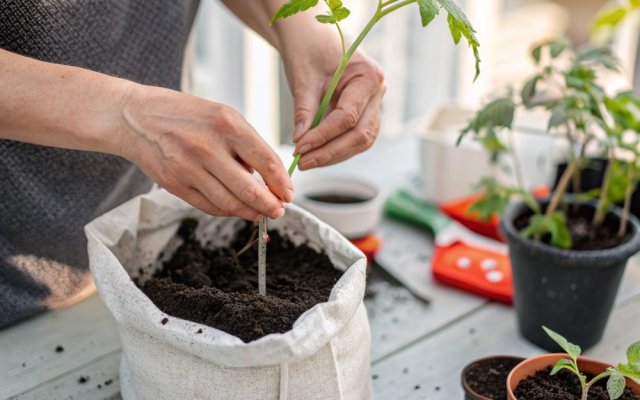
- Plant: seedlings at the same depth they were in their nursery pot (tomatoes deeper, up to the first leaves), seed at the depth on the packet.
- Water in, then put the pots where they get the light you counted. Heavy pots go in place before they are filled.
- Check the mix each morning for the first week. New plants in fresh mix dry out faster than you expect.
First-season calendar
| When | What to do |
|---|---|
| Early spring (after the last frost is close) | Sow lettuce, radishes, peas, spinach and chard directly. Buy and pot up herbs. Harden off any seedlings raised indoors. |
| Late spring (nights reliably above 50°F) | Plant out tomatoes, peppers, cucumbers, beans and squash. Start feeding once plants are established. |
| Early summer | Pick lettuce and radishes, sow more every two weeks. Stake tomatoes and cucumbers before they need it. Mulch the surface of big pots. |
| Midsummer | Water daily, feed fruiting crops every one to two weeks, pick beans and cucumbers often so the plants keep producing. |
| Late summer | Sow lettuce, spinach and radishes again for fall. Stop feeding tomatoes so the fruit ripens. Plant garlic cloves in a deep pot. |
| Fall | Harvest the last tomatoes before frost, pull spent plants, and keep kale, chard and lettuce going. The fall guide has the month-by-month version. |
Common first-season problems
Most of what goes wrong in a first container garden comes back to size, water or light, and all three are fixable.
| What you see | What it usually means | What helps |
|---|---|---|
| Plants wilt every afternoon and recover at night | The pot is small for the plant, or it is drying out by midday | Water in the morning, mulch the surface, move up a pot size next time |
| Leaves yellow from the bottom up | Nutrients have washed out of the mix | Start a liquid feed every one to two weeks |
| Lots of leaves, little fruit | Too much nitrogen, or too little sun | Switch to a tomato-type feed, check the hours of sun |
| Seedlings stretch tall and thin | Not enough light | Move to a sunnier spot; sow the next batch in more sun |
| Mix stays wet and the plant sulks | Poor drainage, or the pot is too big for a small plant | Check the holes are clear, raise the pot on feet, water less often |
| Flowers fall off without fruit | Heat stress or a cold snap | Wait for the weather to settle, keep watering steady |
What to read next
Once your first pots are planted, the guides below cover the next decisions in more depth. The Getting Started section keeps them all in one place.
- Choosing containers compares materials, sizes and costs.
- The potting soil guide explains what is in a bag and which ones to buy.
- How to water container plants covers timing, amounts and holidays.
- Growing vegetables in containers lists every crop guide with its pot size.
Common questions
How many containers should I start with?
Three to five. That is enough for a few different crops and a real harvest, and few enough to water easily while you learn how quickly each one dries out. Add more next season once you know what you like.
Can I use the soil from my garden in pots?
It is best not to. Garden soil compacts in a container, drains poorly and can bring pests and disease with it. Bagged potting mix is made for pots and gives much better results.
Do I need to feed container plants?
Yes, after the first month or so. Watering washes nutrients out of a pot, and the plant has no other source. A balanced liquid feed every one to two weeks through the growing season covers most crops.
What is the easiest thing to grow first?
Cut-and-come-again lettuce, radishes and bush beans are quick and forgiving. Among herbs, chives, mint and parsley are hard to fail with. A compact cherry tomato is the most rewarding of the slower crops.
Can I reuse potting mix next year?
For herbs, flowers and leafy crops, yes. Tip it out, remove old roots, mix in a third fresh mix and a little slow-release feed. For tomatoes and potatoes, start with fresh mix, since disease can carry over.
Read next
About the author
Carsten
Hi, I'm Carsten. My garden is paved over, so there is no soil to plant into and everything I grow lives in a container. I started this site to find out how much is possible that way, and I use it to share what I learn about choosing containers, growing useful plants in small spaces, and making gardening work for different homes and different bodies. Questions, corrections and photos of your pots are all welcome. say hello.